




Oct 15, 2025
 Download as PDF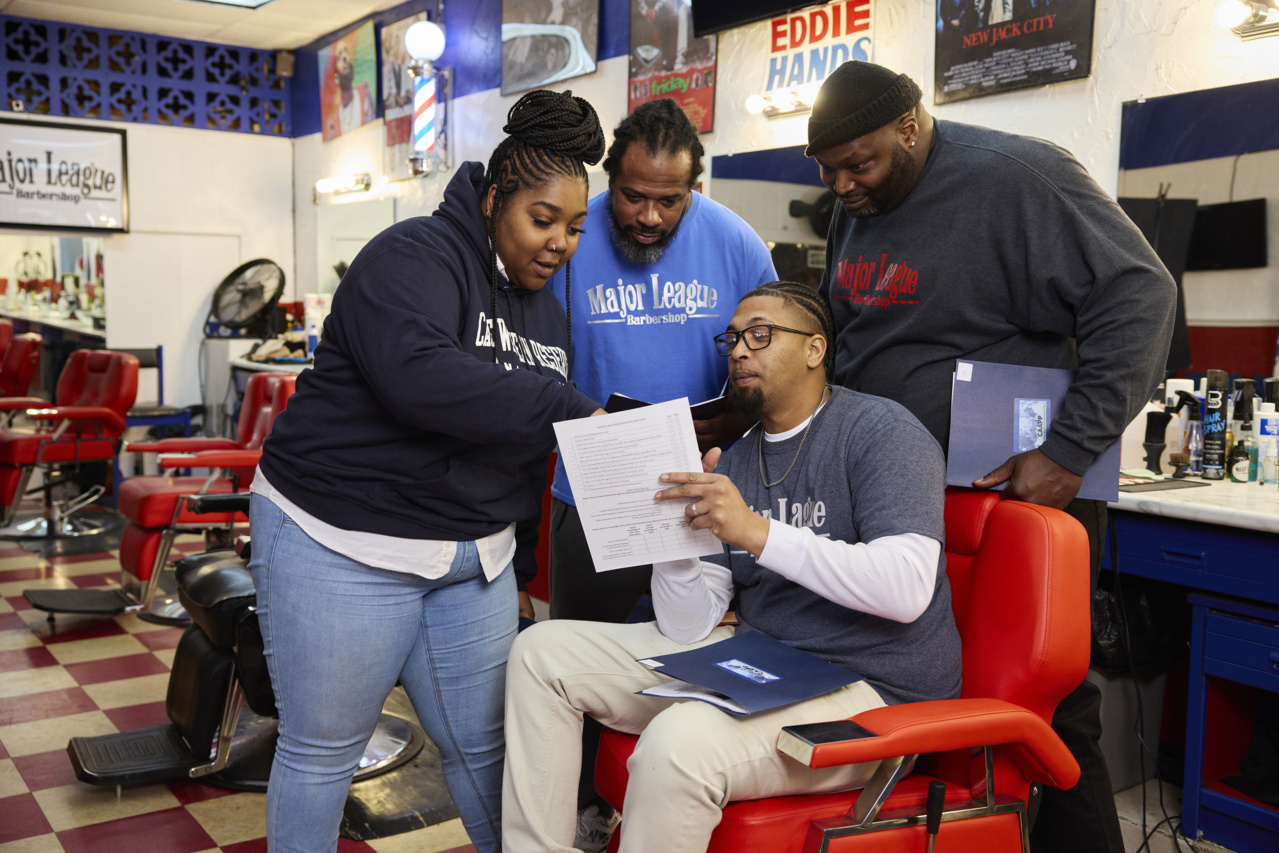
The Cleveland African American Prostate Cancer Project (CAAPP) is a research project in Cleveland, Ohio led by a team of cancer survivors, researchers, doctors and community members that aims to increase prostate cancer screening in the African American/Black community using the voice and reach of barbers. Prostate cancer (PCa) is the leading cancer diagnosis and the second leading cause of cancer-related death among Black men (American Cancer Society, 2025). CAAPP’s goal is to get Black men screened for prostate cancer starting at age 40, as they are at higher risk and early detection helps to reduce mortality and increase options for treatment.
A foundational step to accomplishing this goal was CAAPP’s development of their Lay Health Advisor barber training, which was designed to build barber confidence in discussing the function of the prostate and the importance of prostate cancer screening. The barber training activities developed through CAAPP are grounded in the core principles of Adult Learning Theory (ALT), which mirror those of Dialogue Education and seminal learning-centered practices. These approaches recognize that adults learn best when education is relevant, practical, and connected to their lived experience (Merriam & Bierema, 2013; Brookfield, 2018). In this case, the barbers, already highly respected figures in their communities, are treated as partners in the learning process, not passive recipients of information.

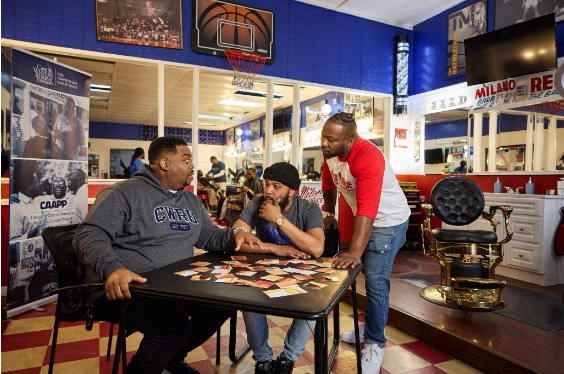
Rather than relying on lectures or heavy medical jargon, the training creates a space where barbers can draw from what they already know and connect it to new knowledge about prostate health and cancer prevention. The experience is designed to feel engaging and empowering. For example, the barbers work together to assemble and label the parts of the male reproductive system in an interactive and team-based activity called the Prostate Puzzle (see photo), with the winning teams earning bragging rights. Each team is tasked with properly arranging the puzzle pieces and identifying the various internal and external components of the male anatomy, in addition to correctly matching their defined functions. It’s a hands-on, visual exercise that not only makes technical anatomy more understandable, but also sparks conversation, peer learning, and real-time corrections of misunderstandings. This method of interactive, embodied learning aligns with research showing that adults retain information more effectively when learning is active, social, and problem-based (Fenwick, 2000; Kolb, 1984).
Another cornerstone of the training is the use of role play. In these scenarios, barbers practice having conversations with clients about common prostate cancer myths, fears about PSA testing, and how to gently correct misinformation. These sessions help build confidence and fluency, allowing barbers to explore different ways to communicate complex or sensitive topics in a supportive, low-stakes environment. The training also includes facilitated discussions where barbers talk openly about the real barriers their clients face, things like fear of a cancer diagnosis, mistrust of the healthcare system, or not knowing where to get screened. These conversations are powerful because they validate the experiences barbers bring into the room and reinforce learning as a collective process. They also shift the focus from passive instruction to shared problem-solving, allowing participants to use their community insight to help each other craft culturally relevant and practical responses to these barriers (Wallerstein & Duran, 2010).
Finally, the training builds in time for reflection both individually and as a group. Barbers are invited to think about what being a Lay Health Advisor (LHA) means to them personally and what kind of difference they want to make in their community. This reflective space supports internal motivation, a key tenet of adult learning, and helps reinforce the barbers’ agency and leadership in health advocacy (Merriam & Bierema, 2013).
Overall, the application of Adult Learning Theory and Dialogue Education throughout the CAAPP barber training is intentional, evidence-based, and deeply human. The learning is active, collaborative, and flexible, with facilitators continuously “flexing to the learner” and adapting their approach based on the group’s energy, readiness, and feedback. This model doesn’t just inform barbers—it empowers them to take action, lead trusted conversations, and play a vital role in reducing prostate cancer disparities in African American communities.
References:
- American Cancer Society. Cancer Facts & Figures 2025. Atlanta: American Cancer Society; 2025.
- Brookfield, S. D. (2018). The skillful teacher: On technique, trust, and responsiveness in the classroom (3rd ed.). Jossey-Bass.
- Fenwick, T. J. (2000). Expanding conceptions of experiential learning: A review of the five contemporary perspectives on cognition. Adult Education Quarterly, 50(4), 243–272.
- Kolb, D. A. (1984). Experiential learning: Experience as the source of learning and development. Prentice Hall.
- Merriam, S. B., & Bierema, L. L. (2013). Adult learning: Linking theory and practice. Jossey-Bass.
- Wallerstein, N., & Duran, B. (2010). Community-based participatory research contributions to intervention research: The intersection of science and practice to improve health equity. American Journal of Public Health, 100(S1), S40–S46.
Where do you see the 6 core principles reflected in this research project?
Rebecca Miller, MPH, MS is a Certified Dialogue Education Teacher and Partner with Global Learning Partners. Read more blogs by Rebecca Miller here.
Sydney Evans, MSASS/MSW CHW is a Community Navigator for the Cleveland African American Prostate Cancer Project at Case Comprehensive Cancer Center.
Here are some resources for further reading:
- The Barbershop and Salon Health Outreach Program Toolkit Developed by: Colorado Black Health Collaborative & Kaiser Permanente African American Center of Excellence (2015). It is a comprehensive, culturally responsive guide created to support the design and implementation of health promotion initiatives in barbershop and salon settings. Developed through a collaboration between the Colorado Black Health Collaborative and the Kaiser Permanente African American Center of Excellence, the toolkit empowers community health workers, clinicians, barbers, stylists, and volunteers to launch, sustain, and evaluate outreach programs that address health disparities in Black communities.
- Holt, C. L., Wynn, T. A., Lewis, I., Litaker, M. S., Jeames, S., Huckaby, F., Stroud, L., Southward, P. L., Simons, V., Lee, C., Ross, L., & Mitchell, T. (2009). Development of a barbershop–based cancer communication intervention. Health Education, 109(3), 213–225. This article describes the development of a barber‑led intervention designed to promote prostate and colorectal cancer awareness among African American men.
- GLP Blog Post: Ways to Energize, Purposefully
- GLP Podcast: Episode 101: What is a Learning-Centered Approach