



Aug 13, 2025
 Download as PDF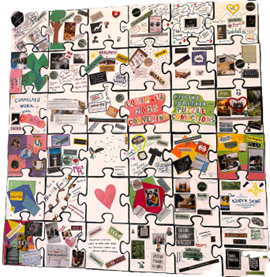
Most of us have at least one song that can shift our mood instantly. You could be feeling off—unmotivated, anxious, or disconnected—but the moment that song starts playing, your mood changes. That’s the power of emotional connection. And it’s not unique to music.
When we feel emotionally connected to something, we’re more likely to engage deeply with it. The same principle can (and should) be applied to learning.
If we want participants to fully invest in what we’re teaching, we need to connect with their hearts, not just their heads.
Emotions Drive Engagement
Emotional connections trigger the release of neurotransmitters in the brain that increase feelings of pleasure, motivation, and social bonding. These emotions help participants retain information, engage in meaningful dialogue, and apply what they’ve learned. However, emotional connection can’t be forced, it has to be invited.
Heart-centered design invites learners to ask themselves:
- Why should I care?
- Why does this matter to me?
- What meaning do my experiences contribute to the collective learning space?
Bringing Heart-Centered Design to Life
Over the past two years, my team at the California Quality Collaborative led EQuIP-LA, an initiative dedicated to reducing disparities of care experienced by Medi-Cal enrollees of color in Los Angeles. Early on, we recognized that for this work to succeed, we couldn’t simply present data or frameworks and hope for change – we had to tap into something deeper: our lived experiences. At its core, addressing health equity starts with acknowledging that we all show up with different histories, motivations, and ways of seeing the world. Not only do our lived experiences shape how we learn, connect, and create change – but they make us who we are.
To ground the initiative’s participants in purpose, we began each of our in-person convenings with community-building sessions centered around emotional connection and lived experience. These sessions were not your typical warm-ups – they were intentional experiences that invited learners to find their own meaning through reflection, storytelling and creativity. They helped participants enter the learning experience as their full selves, brought heart into the room, and in doing so, created a powerful foundation for deep engagement.
Four Core Elements of Impactful Heart-Centered Sessions
Heart-centered learning experiences help adults connect with themselves, each other, and the work ahead by combining four essential elements.
- Introduction/Prompt. Begin with a clear introduction to set the tone and explain the purpose behind the activity. Introduce a thoughtful prompt to invite learners to find personal meaning related to the days learning.
- Why it works: Research has shown that relevance—especially affective (emotional) relevance—enhances knowledge retention and opens learners to new experiences. (See GLP’s helpful 6 Core Principles of Adult Learning)
- Time for Personal Reflection. Before jumping into the hands-on activity, give participants time to privately reflect on their own experiences in relation to the work.
- Why it works: Self-reflection strengthens internal motivation. It gives learners space to make personal connections—boosting engagement and ownership of the learning experience.
- A Creative Activity. Utilize hands-on craft activities such as collaging, decorating, or painting to help participants express their thoughts in unique and meaningful ways.
- Why it works: Creative expression engages multiple areas of the brain—especially those tied to emotion. It speaks to different learning styles and taps into the “hands” domain of learning (psychomotor), not just the “head” (cognitive).
- Group Sharing. After creating, invite participants to share what they made or discovered with the group.
- Why it works: Sharing builds community. It shows that all voices matter, fosters interpersonal connection, and makes learners feel seen and valued.
Heart-Centered Design in Action – Examples from EQuIP-LA
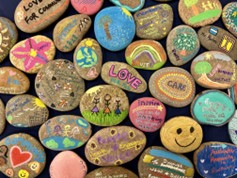
“What’s Your Why?” At our first convening, we invited participants to decorate a stone with their personal why—why health equity mattered to them. Without being prompted, many wrote pages to explain the meaning behind their stone. We formed a large circle, and one by one, learners shared deeply personal stories with a group of 35 strangers. The session ran 25 minutes over—but it was worth it. The value of hearing from everyone far outweighed the importance of staying on schedule. I remember driving home that day with my heart feeling full in a way I had never experienced from work before.
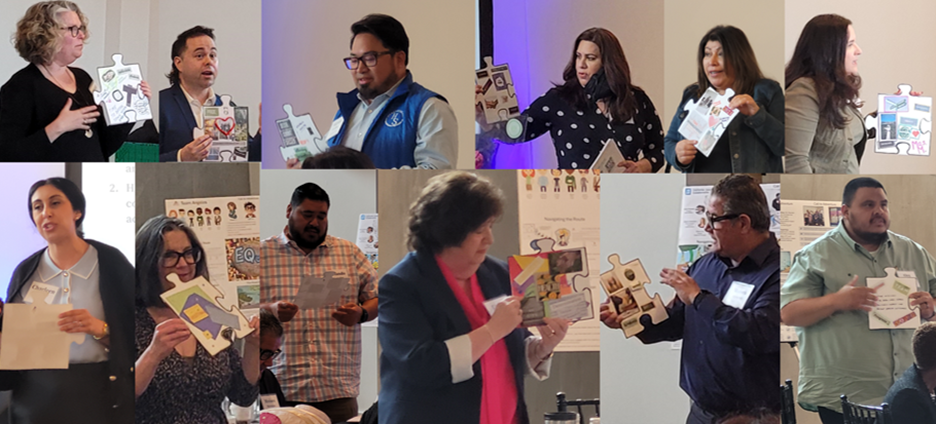
“The Strength of Our Connections” Fast forward two years to our final convening: we asked participants to reflect on a meaningful connection they’d made during the program—an insight, a relationship, an aha! moment—that would stay with them beyond the program. Each person decorated a blank puzzle piece to represent that connection, then shared it with the group before adding it to a collective mosaic. The final puzzle symbolized more than just completion—it represented community, impact, and our shared commitment to continue this work.
Tips for Using Heart-Centered Design in Your Learning Events
- Think outside of the box. Get creative! Ask—what could we do that has never been done before? Heart-centered design can be used in any learning event, virtual or in-person, regardless of topic.
- Model vulnerability. Facilitators should participate in the activity and share first. It helps create a safe space for others to open up.
- Give flexible instructions. Let learners express themselves in ways that feel true to them. Offer suggestions, not requirements. Remember—emotional connection can’t be forced.
- Prioritize time for reflection and sharing. Be sure your design includes ample time for group sharing. Build in buffer timing between sessions to ensure that everyone who wishes to share has the space and time to do so without feeling rushed.
Final Thoughts
Remember, when we center design around the heart, we do more than teach—we transform. We meet learners where they are, honor their lived experiences, and invite them to move beyond superficial participation and into something deeper—connection, purpose, and growth.
How has this inspired your thinking?
Erika Lind is Manager of Care Transformation Events and Learning at Purchaser Business Group on Health (PBGH) and is responsible for implementing the systems and processes that underpin its Care Transformation programs, events and learning.
Here are some resources for further reading: