




Mar 4, 2025
 Download as PDF
Three small rural communities in Ukhia, Bangladesh where child marriage rates are quite high (most girls are married by or before age 15), was the site of a 5-day workshop I designed and co-facilitated to create interventions to shift social norms that perpetuate child marriage using a tool designed and validated for diagnosing drivers of child marriage.
GLP’s learning-centered approach contributed greatly to the success of this inspiring and potentially impactful workshop. Staff from Food for the Hungry Bangladesh were fully engaged in working to understand and gain insights from the data we had previously collected. This helped them to connect the dots and design interventions that would reach the most influential community members.
Data Leads to More Questions
My colleagues and co-facilitators, Fatema Tuj Johora and Farzana Akter, realized that there were aspects of our data results that really piqued our curiosity – there was so much more we wished we knew! The results were very different from our results using the same tool in a different community one year earlier.
The new community was more conservative and religious (Muslim and Hindu) than the previous community, but religious leaders weren’t mentioned as influential people. Male in-laws were the most influential, followed by community leaders. Whereas in 2023, people were most influenced in their decision to engage in child marriage by relatives with close kinship ties (not in-laws), and spouses. We were also quite surprised to learn that most of the almost 500 community members surveyed do not personally believe that child marriage is the right thing to do, yet they feel they have no choice because of strong normative expectations – they feel important people in their lives expect them to arrange for their young daughters to be married by age 15 at the latest.
Community Visit
We decided to take advantage of a scheduled community visit during the 5 days to see if we could deepen our understanding of dynamics and the drivers of social norms in the community.
We developed a draft guide for a few focus group discussions and key informant interviews that we could use during the community visit. We leaned on open questions (for more on open questions, see Betsy Barton’s great blog) and the GLP core principles.

The participants also had questions and wanted to know more. Initially participants wanted to ask questions that could have implied judgment and disapproval, such as “Why do you practice child marriage?” We explored the sorts of questions that would make us feel more comfortable if we were in their situation, so that community members would be more likely to explore their thoughts and feelings, openly and freely.
Together we developed a list of open ended, respectful questions and follow up prompts i.e., for grandmothers: “Please tell us what it was like when you were a child. How are things similar or different for your grandchildren today? What has improved? What changes concern or worry you?” Community members were noticeably engaged with these questions, and we learned much, finding answers to many of our questions, as well as questions we hadn’t thought to ask.
Flexibility and a Step Back
One beauty of the learning-centered approach is flexibility – doing what is needed to promote learning rather than getting stuck on “covering the material” or sticking to a plan. Within the first hour of the workshop, we hit an unexpected challenge – the participants were requesting that everything be interpreted into Bangla. In a previous workshop we had done a mix of Bangla and English, making good use of small group and partner work. This required a quick pivot and adjustment of our plans.
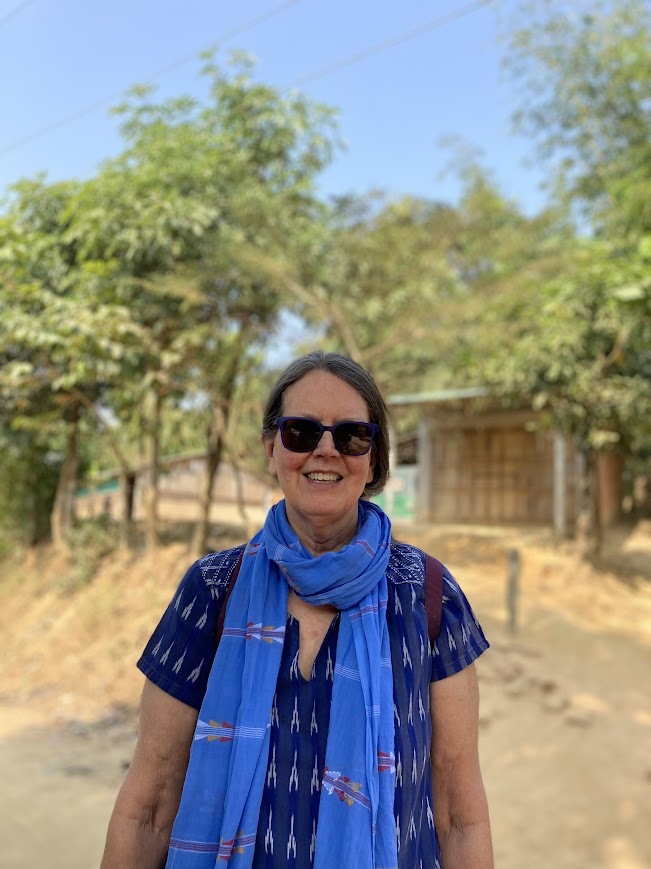
Since I don’t speak Bangla, every activity I had planned to facilitate would take longer with interpretation. Instead, I had to trust the design and the team, and hand over many of the activities I had planned to lead to my co-facilitators. People fluent in English took turns sitting with me, to quietly interpret into English as needed. I still led some activities, with pauses for interpretation, but overall, this provided a great opportunity for me as the lead facilitator to take a big step back. It worked beautifully, and I’m grateful to the participants for voicing their learning needs early.
Just-in-Time Designing
I got up at 4am one morning to design a lesson that would take participants through the steps of writing stories based on the data results. The groups wrote stories about change, with discussion prompts, that connected and responded directly to the data results. We based the stories on the Participatory Learning and Action (PLA) tool, Real Stories. We have used this PLA tool both for gathering data and to spark discussion and present alternatives for consideration, for shifting social norms around child marriage. I am grateful to Global Learning Partners for this collaborative work in 2021 described in this GLP project spotlight (with links to the tool).
Our hope is that the interventions we developed in the workshop can help decrease the intensity of the social pressures, so that families who prefer not to engage in child marriage feel more freedom to follow their conscience, and in so doing, provide role models for others, leading to lasting change.
How does this work inspire you in your work?
Mary DeCoster is currently working as an independent consultant, with a focus on International Social and Behavioral Change programming. She especially enjoys working with communities to discover and take ownership of their own solutions to perplexing problems such as persistent, harmful social norms.
Read more blogs by Mary.