



Jan 12, 2026
 Download Tip Sheet
Plain Language – its very name doesn’t make for an exciting introduction! So, I’ll tell you how I got started as an avid proponent. In 2005, after the human-caused flooding from Hurricane Katrina in southern Louisiana, I got connected with “The Road Home” program that was giving money to homeowners who lost everything in the floods. They believed low literacy was causing people to misunderstand the funding application and to return confused for added appointments.
We discovered it was more of a universal design issue that affected everyone. Because the complicated process kept changing, there was no simple explanation or graphic, and information was only provided verbally. As well, the people who came into their appointments were experiencing tremendous fear, uncertainty and grief which affected their ability to take in and retain what was then a lot of verbal information. A plain language approach was required, and I’ve been hooked on it ever since.
The beauty of plain language is that it is a universal need to improve understanding and save time for everyone. It’s not “dumbing down” the content for the few.
What is Plain Language?
Plain language is a way of writing that makes materials easier for your audience to read, understand, and use. The material is so clear; the reader can take in the writer’s exact message in one reading. What is clear, or what is plain to your reader, varies by intended audience. Unclear writing can lead to negative and life-altering decisions, extra staff costs for your organization and loss of trust and safety from your audience.
Quick Take
Here are my top 3 recommendations for plain language materials.
- Aim for 6 to 8 grade reading level when writing for the public
- Convey information in bite-sized chunks
- Design for the skimmer – use headings and lists
Remember what medicine labels used to look like before the plain language movement?

5 Tips for Writing in Plain Language
Use Active Voice with Strong Verbs
More than any other single technique, using “you” pulls readers into the text and makes it relevant to them. “Do this.” The GLP approach to designing learning tasks is all about using active voice. You’ll know absolutely at once from your learners if your task was clear enough on the first reading!
If there are multiple audiences (such as a Training of Trainers course or Facilitator Guide), name who the “you” is to ensure clarity. For example, “Facilitators of this training (you) will strengthen your skills …”.
Write for Your Audience
Understanding and empathizing with your audience is key. What may be clear to you may not be clear to them. If you have access to a representative audience member, you can see how they access your materials and invite a conversation about specific language. If you don’t, use your internal resources to draft an outline of assumptions you have about your audience to guide you.
Structure Your Content
Consider these ideas for organizing your material for easy and quick comprehension:
- Put the main message first
- Divide your material into short sections
- Group related ideas together
- Put material in an order that makes the best sense to the reader
- Use headings and sub-headings
People usually only want to know what applies to them. Tell them why the material is important. Even though your document may affect a thousand or a million people, you are speaking to the one person who is reading it. When your writing reflects this, it’s more economical and has a greater impact.
Be Concise and Use Concrete Familiar Words
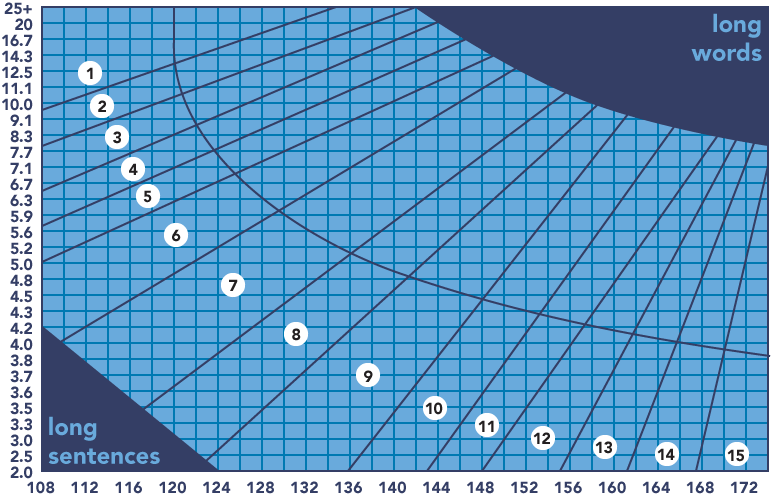
Reading level is a function of word length and sentence length, so do what you can to lessen both. The Fry Readability Graph (see here) shows this and has been validated in both English and Spanish. If you’re trying to lower the reading level of a given text, try these tips.
- Turn long sentences into two shorter ones
- Cut unnecessary or repetitive words and phrases
- Use words with few syllables
- Check homonyms (words with more than one meaning e.g. illustrate, engage)
Example from plainlanguage.gov:
| Before: When the process of freeing a vehicle that has been stuck results in ruts or holes, the operator will fill the rut or hole created by such activity before removing the vehicle from the immediate area. | After: If you make a hole while freeing a stuck vehicle, fill the hole before you drive away. |
Use Design Elements
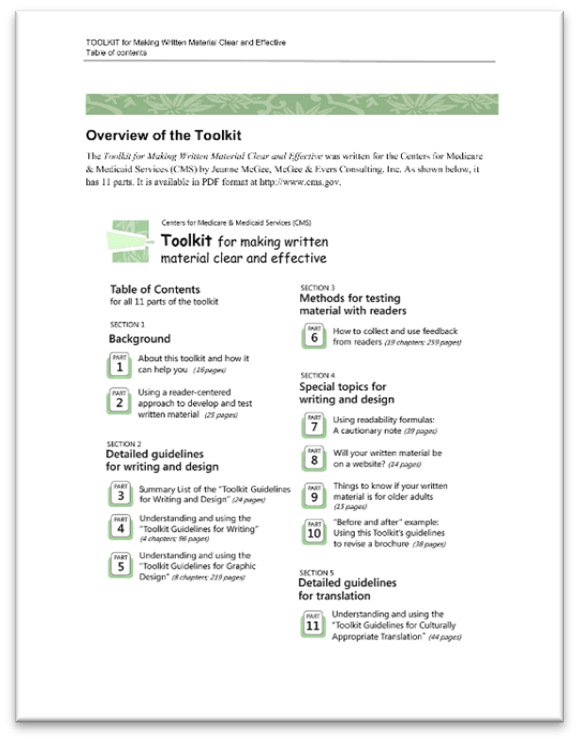
Platforms, graphic designers and even Word Processing programs have made it easier to organize information using design elements that contribute to ease of reading. See the Sample Table of Contents here (plainlanguage.gov) that uses graphic images, white space and headings for easy skimming. You can “Check Accessibility” for “Insights” in the “Review” Tab of Microsoft Word for these and other elements that ease readability:
- Vertical (list) presentation of complex information
- Table of Contents and clear section headings
- Short sections and ragged right margins
- White space and visuals
Making materials simple and easy to understand is one of my favorite things to do. It can have serious impact on life outcomes for anyone trying to learn or do something important.
Which of these tips do you plan to use to increase your plain language?
Rachel Nicolosi is a GLP Partner and Communications Lead. Read more blogs by Rachel.
Here are some resources for further reading:
- Universal Design for Learning – Acknowledging All Learners
- Tips for Facilitating Groups with Low Literacy
- Tips for Honouring and Inviting Diversity in Group Learning
- Plainlanguage.gov
Additional Resource in Download – Included in the downloadable resource at the top is a list of suggested replacement words specific to the adult learning field. It will help you avoid jargon in something like a facilitator’s guide.
Readability Note: The MS Word accessibility check editor shows that this blog post is written at an 8.0 grade reading level. (Details: 1.7 sentences/paragraph, 14 words/sentence and 4.8 characters/word.) It has tables and headings, the contrast color of text to background is good, but it was missing alternative text for the images which were suggested and approved.